

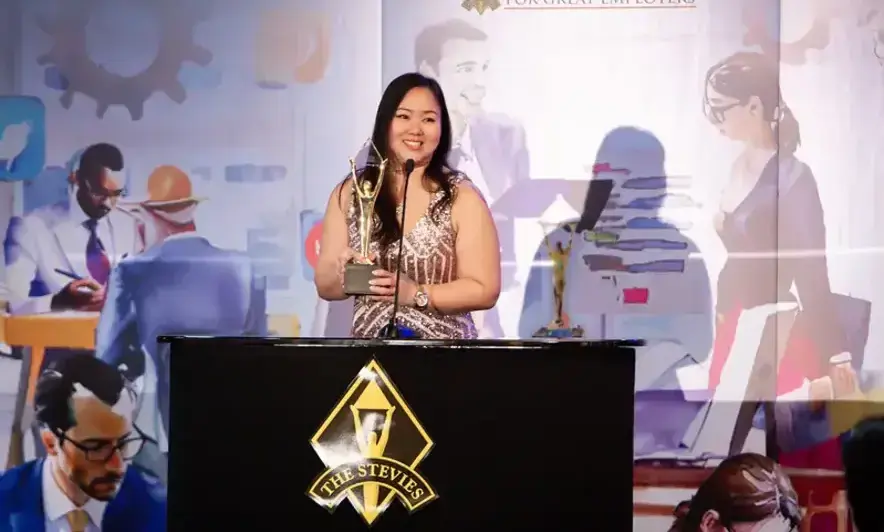
If you’re reading this, chances are you’ve been shortlisted for an award, or you’ve already won one. Congratulations! The hard part is over. Now it’s time to think about what you’ll say on stage, because a good acceptance speech is short, warm and planned, even when it sounds spontaneous.
First, check whether you’ll give a speech
At most business awards, winners walk up, collect the trophy and pose for a photo, with no speech at all. Individual awards, lifetime achievement awards and smaller ceremonies are more likely to invite a few words. Ask the organiser. If the answer is ‘maybe’, prepare anyway. Thirty seconds of planned words beats two minutes of panic.
How long should an acceptance speech be?
Shorter than you think. Aim for 30 to 60 seconds, and never more than two minutes unless the organiser has asked for longer. Most people speak at around 130 words a minute, so a one-minute speech is about 120 to 150 words. The room is usually on a tight running order, and nobody has ever complained that a winner was too brief.
How to write an acceptance speech
The best acceptance speeches appear effortless yet follow a simple structure:
- Thank the organiser, the judges and the sponsor, and name the award.
- Credit the people who made it happen.
- Share one short story or fact that shows why it matters.
- Close with what the win means to you, and say thank you once more.
Write a draft, then read it aloud and cut anything that doesn’t sound like you. Practise in front of friends, family or colleagues to get a feel for their reaction, and to settle your pace, tone and body language. The more prepared you are, the less likely you are to stumble or forget someone important.
Show genuine gratitude
An acceptance speech is a chance to show how much the award means to you. Whether it’s pride, surprise or humility, let it show. It reminds the room that behind every trophy there’s a real story of hard work, setbacks and people who kept going.
Mention others, but don’t read a list
Recognising the people who helped you, whether colleagues, customers, mentors or family, shows that no one succeeds alone. But a roll call of 20 names loses the room. Thank the team as a whole, and name one or two people whose part in the story was decisive.
Share something personal
One personal moment makes a speech memorable: a challenge you overcame, a turning point or the customer who made it all worthwhile. Keep it to a sentence or two. It shows the audience the person behind the trophy, and it’s the line people will repeat at the bar.
Mention the organisation and the award
Name the award and the organisation that gave it. It shows respect for the honour and tells the room what you’ve been recognised for. If their mission or values connect with your work, a single line on that link is plenty.
Talk like a real person, not a robot
It’s tempting to reach for your most corporate language, but it makes you sound robotic. Speak as you would to a friend across the table. Plain, warm words make the audience feel connected to you, and you’ll come across as more approachable.
Avoid rambling
Stick to the points you’ve planned and resist the urge to wander. Rambling is where people lose their thread and fumble their words. Give your speech a clear beginning, middle and end, and respect the audience’s time; there are usually plenty more winners to come.
Award acceptance speech example
Here’s a 45-second example for a fictional company, to show how the structure fits together:
‘Thank you to the organisers, to the judges and to our sponsor for this award for Customer Service Team of the Year. This belongs to our 14 advisers in Leeds, and especially to Priya, who rebuilt our complaints process from scratch last spring. When we started, customers waited three days for an answer. Now it’s three hours. Most of all, thank you to our customers, who told us honestly what wasn’t working. We’re going to enjoy tonight, and then get back to making it even better. Thank you.’
Accepting on behalf of someone else
If you’re collecting for a colleague, a team or a client who can’t be there, say so straight away and keep it even shorter. Name who you’re accepting for, thank the organiser and judges on their behalf, and, if they’ve given you a line to read, read it word for word.
What not to do on stage
- Don’t sell. The room knows what your business does, and a pitch from the stage lands badly.
- Don’t rely on in-jokes that only your table will understand.
- Don’t apologise for being nervous. Everyone is rooting for you.
- Don’t forget to look at the audience, not just the trophy or your notes.
Speaking to a room is a skill you can practise, and it matters long before the ceremony. Many awards shortlist finalists for a presentation to the judges, and that’s often where the award is won.
Acceptance speech questions
How long should an award acceptance speech be?
Aim for 30 to 60 seconds, and never more than two minutes unless the organiser asks for longer. At about 130 words a minute, a one-minute speech is 120 to 150 words.
What should I say in an acceptance speech?
Thank the organiser, judges and sponsor and name the award; credit the people who made it happen; share one short story or fact that shows why it matters; then close with what the win means to you and thank them again.
Can I use notes for my acceptance speech?
Yes. A few prompts on a card or your phone are fine. Practise enough that you can look up at the audience rather than read every word.
Do I need to prepare a speech for a business award?
At most business awards, winners don’t give a speech, but ask the organiser. If the answer is ‘maybe’, prepare 30 seconds anyway.
Need help with your awards?
At August Awards, we help businesses enter and win the awards that matter in their industry. We can help with your awards strategy, award entry writing and shortlist presentations, and we’re always happy to give advice on your acceptance speech when you win. Get in touch.